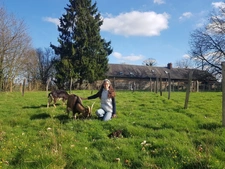
For many people, moving to the French countryside is about much more than buying a beautiful old house.
Perhaps you dream of growing your own fruit and vegetables, keeping chickens for fresh eggs or having a few goats or sheep. Maybe you would like enough land for a small pony or donkey, or simply want the space to become a little more self-sufficient.
A country property with land can make that dream possible — but not all land is equally practical.
From my own experience of country living, keeping animals and growing food, I know that a property can look perfect on paper but still require a considerable amount of work and investment before it is ready for a smallholding lifestyle.
If you are looking for a country house with the potential to grow food or keep a few animals, here are some of the things I would recommend considering.
1. Is the land already fenced?
Good fencing can be one of the most valuable features of a country property.
If you are planning to keep goats, sheep, chickens or other animals, you will need to think about how the land can be divided and secured. Installing fencing can quickly become expensive, particularly if you have a large area of land.
Existing fencing does not necessarily mean that no work will be required. It is important to check its condition and whether it is suitable for the animals you intend to keep. Goats, for example, can be particularly inventive escape artists!
However, a property where the pasture is already divided or securely enclosed can save a considerable amount of time and money when you are setting up.
You should also consider whether there is enough flexibility to create separate areas for different animals, rotational grazing or resting pasture.
2. Think carefully about the water supply
Water is becoming an increasingly important consideration, particularly during periods of hot and dry weather.
A reliable mains water supply is essential for the house, but if you intend to grow a large vegetable garden or keep animals, it can be useful to have additional sources of water.
A well, spring, stream or other natural water source may be a valuable feature, depending on its reliability and how the water can legally and practically be used.
Rainwater collection can also be extremely useful for watering a potager and reducing reliance on the mains supply.
When viewing a property, consider asking:
* Is there a well, spring or other private water source?
* Is it currently used, and does it provide water throughout the year?
* Is there a stream or pond?
* Is there a system for collecting rainwater?
* How easy will it be to provide water to different areas of the land?
If you are planning a productive vegetable garden, carrying watering cans across several thousand square metres of land can quickly lose its charm!
3. Are there suitable outbuildings?
Old country properties often come with barns, stables, sheds or other outbuildings — and these can be enormously useful.
For anyone planning to keep animals, dry and weatherproof shelter close to the pasture is a real advantage. Animals may need protection from heavy rain, strong winds, cold weather and, increasingly, periods of intense sunshine.
Outbuildings can also provide space for:
* Hay and straw
* Animal feed
* Poultry equipment
* Tools and machinery
* Firewood
* Gardening equipment
Secure storage for animal feed is particularly important. You do not want mice, rats or other wildlife helping themselves! In fact, if your own ruminants help themselves to cereal or concentrate feed, this can lead to their own demise!
Of course, potential buyers should check the condition of any outbuildings and consider whether they are structurally suitable for their intended use. But a property with useful existing buildings can offer far more possibilities than a house with land alone.
4. Is there enough land for the animals you want to keep?
It is easy to be attracted by the idea of "a few acres", but the amount of land you need will depend on what you intend to do with it.
The number and type of animals you can comfortably keep will depend on many factors, including the quality of the pasture, the local climate, the amount of supplementary feed you are prepared to provide and how you manage the land.
A small flock of sheep will have very different requirements from a couple of goats or horses.
Before buying, think realistically about your plans. How many animals would you eventually like to keep? Will you need separate grazing areas to rotate pastures or separate species or sexes? Do you want space for a vegetable garden, fruit trees or woodland as well?
It is also worth remembering that managing a smaller area well can sometimes be easier and more productive than owning a large amount of land that you do not have the time or equipment to maintain.
5. Look for natural shade and shelter
Pasture is not just about grass. Grazers need variety and some species, such as goats, require browse (woody plants) as well as grasses and native flowering plants.
Trees and hedges can provide valuable protection from the weather, offering shade during hot periods and shelter from rain and wind.
When viewing a property, look at where the animals would actually spend their time. Is there somewhere they can escape from the midday sun? Are there exposed areas where additional shelter might be needed?
Existing mature trees and hedgerows can be particularly valuable because they would take many years to replace.
6. Is there a good place for a potager?
For anyone dreaming of home-grown vegetables, the location of the vegetable garden deserves as much attention as the house itself.
Ideally, you will want an area that receives plenty of sunshine but is reasonably protected from strong winds. It should also be possible to keep domestic animals and wildlife away from your crops.
The quality of the soil is another important consideration. Is it reasonably workable, or is it extremely stony, compacted or difficult to cultivate?
A vegetable garden can be improved over time, of course. Compost, manure, mulching and raised beds can all help to develop a productive growing area. But starting with reasonably workable soil can make life much easier.
It is also worth considering how close the potager is to the house and to a water supply. A beautiful garden at the far end of several hectares may sound idyllic, but a conveniently located potager is much more likely to receive regular attention!
7. Think about the practical layout of the property
The overall layout can make a surprising difference to everyday life.
Ideally, the house, vegetable garden, animal areas and outbuildings should work together.
For example:
* Are the animal shelters close enough to the pasture?
* Is there easy access for bringing in hay or straw?
* Is feed storage convenient and secure?
* Can you easily reach the animals in bad weather?
* Is there a water supply nearby?
* Is the potager somewhere you will pass regularly and remember to water, weed and harvest?
A property does not need to be perfectly organised when you buy it. Part of the pleasure of a country property can be adapting it to your own lifestyle.
However, a practical starting point can save a great deal of work.
8. Look beyond the house itself
When buying a rural property, it can be tempting to concentrate on the kitchen, the bedrooms and the character of the house.
But if your dream includes animals, fruit trees and home-grown food, the land and outbuildings deserve just as much attention.
A modest house with practical land, useful outbuildings, good fencing and a reliable water supply may be far better suited to your lifestyle than a beautiful property where you need to spend tens of thousands of euros creating those facilities from scratch.
Two examples of country properties with potential
Two of the rural properties I am currently marketing already offer many of the features that can make a smallholding or self-sufficient lifestyle easier to establish.
One, in Le Teilleul in Normandy, offers more than 8,000 m² of land, including pasture that is already fenced and suitable for animals such as sheep, goats or small equines. The property also benefits from useful outbuildings, natural shade and an established area for growing vegetables.
The second, in Mellé in Brittany, is another peaceful country property with fenced land that could be adapted for poultry with useful outbuildings and growing areas already prepared. It also benefits from natural water features, including a stream and a small pond.
Neither property needs to remain simply a house with a large garden.
For the right buyer, they could provide the starting point for a more productive and self-sufficient country lifestyle.
The right country property is about possibilities
A rural property with land offers an opportunity to create a lifestyle that is increasingly difficult to find elsewhere.
You might begin with a few chickens and a small vegetable garden. Over time, perhaps you add fruit trees, a few sheep or goats, or develop the land in ways you had not originally imagined.
The important thing is to look beyond the house itself and consider what the property will allow you to do.
Good fencing. Water. Shelter. Useful outbuildings. Productive soil. Sunshine. Shade.
These practical details may not be as immediately exciting as an old stone fireplace or a beautiful view, but they can make all the difference between a dream that remains an idea and a country lifestyle that is genuinely enjoyable to live.
If you are looking for a country property in north Mayenne, south Manche or the surrounding rural areas, and you have a particular project in mind — whether that is a productive potager, a few animals or simply more space to live closer to nature — I would be happy to help you find a property with the potential to make that project possible.